

If you’re reading this, then you likely have a pretty good idea what the Pixii Max is all about.
The Pixii Max is a full-frame digital rangefinder camera which accepts M-mount lenses. Pixii has previously made APS-C sensor rangefinder cameras, but this is their first full-frame offering. Some call it an alternative to digital Leica rangefinders. More on that later.
As a long time Leica user, the Pixii Max immediately captured my attention and piqued my curiosity. It’s the first full-frame non-Leica M-mount digital camera. It doesn’t have a screen. It costs less than a Leica. It looks fun. I had to order one and try it out.
Here are my thoughts…
Before diving in, it’s important to note a few things up front:
- I’m not a professional reviewer, nor do I review equipment in the same manner as more established websites. I review equipment from the perspective of an everyday user. I’m not interested in taking photos of charts in every conceivable way available, nor do I care about testing every technical aspect of equipment. I just want to see how these things work in the real world.
- No one paid me to do this review, and no one loaned me the Pixii Max. I purchased it because I was curious about the camera.
- I’ve been shooting with a Leica M body of some kind for a little over 10 years.
Anyway, let’s get started!

The Pixii Max comes in a few options:
- Matte black, 32GB of internal storage @ $4,700 USD
- Matte black, 128GB of internal storage @ $5,000 USD
- Space grey, 32GB or 128GB of internal storage @ $5,000 USD
I’ll spare you boring details about the specs – that’s available on Pixii’s website or B&H Photo. However, it’s worth noting that the Pixii Max is only capable of internal storage. It doesn’t have an external memory slot. There are pros and cons with only having internal storage. On the plus, you don’t have to worry about losing a memory card. The downside is if the camera breaks then your photos are gone (if they haven’t been backed up, of course). I don’t mind the internal storage, personally.
Additionally, the Pixii Max features Wifi and bluetooth connectivity to allow for controlling the camera remotely and viewing images.


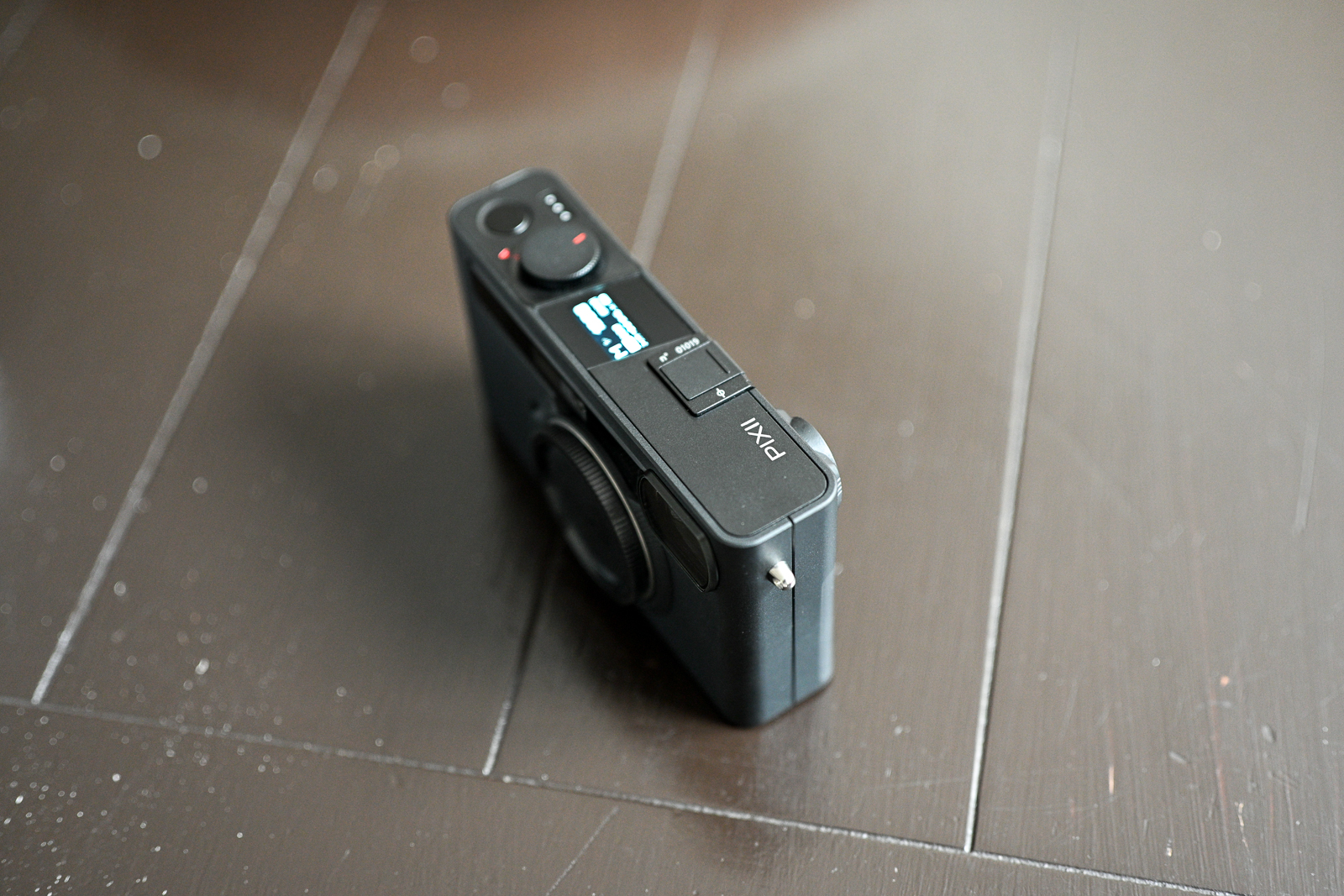
Handling
If you’ve handled a digital Leica M, then you will more or less feel at home with the Pixii Max. The layout is fairly typical for a camera like this. It’s layout is what I would call “classic.”
With that said, handling wasn’t perfect for my photography technique and tastes, but it worked well enough.
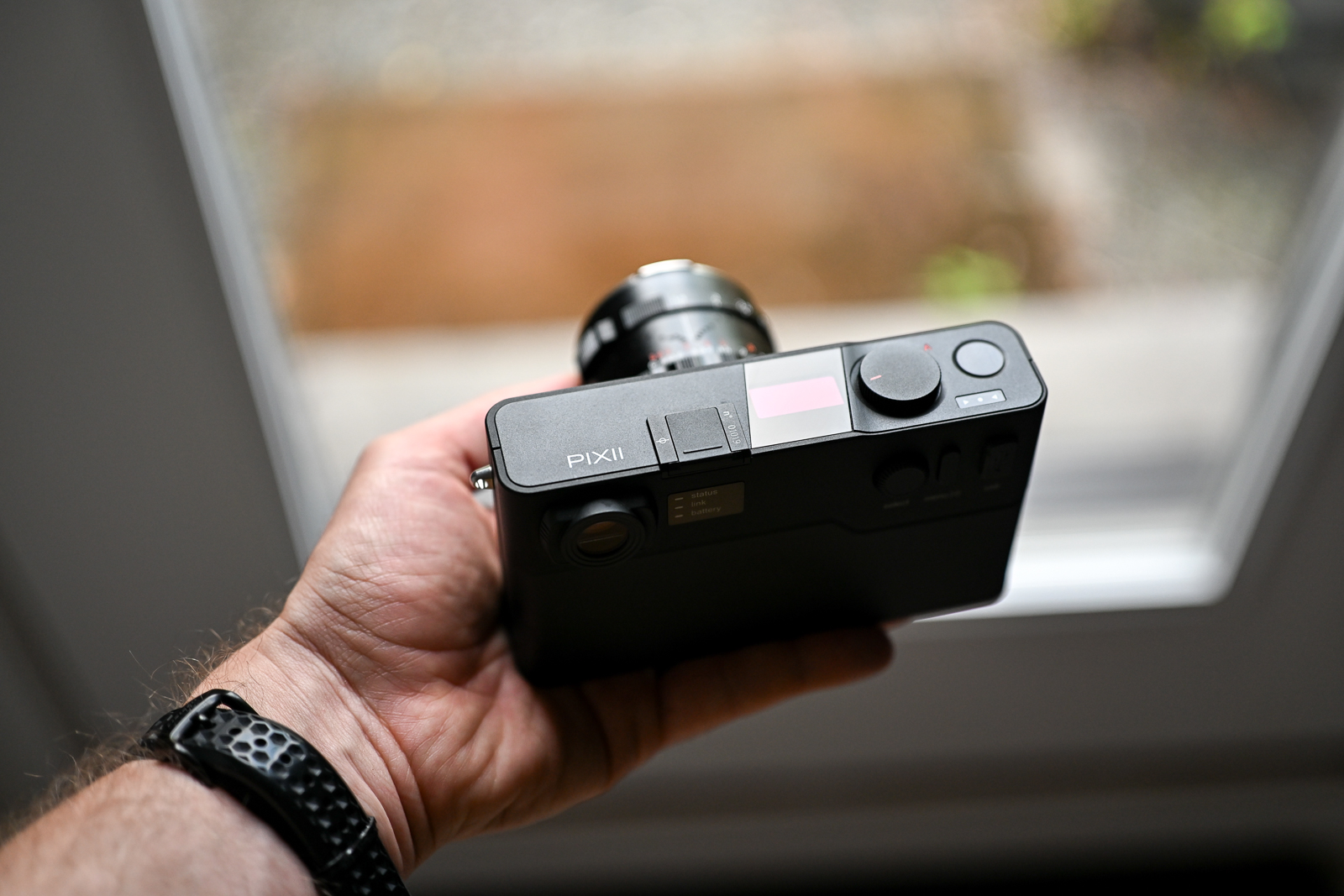
All the usual settings are located in the menu, such as the white balance, ISO, frame lines, and such. This is fairly typical for modern cameras (though not ideal, if you ask me). It is along these lines I’ll offer my main criticism of the Pixii Max’s handling.
First, I wish the shutter dial displayed the shutter speed values (similar to a Leica M or Nikon zf). I just like seeing the shutter speeds on the dial, rather than seeing them on a screen. Second, I wish the camera had a dedicated ISO button/wheel. Third, I wish there was one button that could act as a customization button, say for white balance, frame lines or another setting unique to a photographer’s style.
Now, before anyone gets mad, it’s important to point out that the power/menu button can be customized as a shortcut based upon preference, which in turn can allow the user to jump directly to ISO, WB, color/mono and so on. I don’t care for this approach, honestly. The power button and menu button are already the same button, and now that button also serves as a customization button? One button serving three different purposes doesn’t make sense to me. Sorry.
Personally, the only settings I consistently use on a camera like the Pixii Max are the shutter speed and ISO. I rarely interact with the menu or look at the screen on my Leicas, for example. So, I’d prefer to just have these values clearly displayed and accessible without looking at or interacting with a menu. Having to look at a screen and dive into a menu for something as basic as ISO or shutter speed settings isn’t ideal. Again, that’s just my own personal preference.
Additionally, the camera is too lightweight for my liking. For example, I tested a few f/1.4 lenses on the Pixii Max and all felt off-balance. Granted, these are heavier M-mount lenses, but they don’t feel as off-balance on bodies such as the M240, M10, M11 and such. Either way, the Pixii Max seems better-suited for f/2 and/or smaller lenses.
Finally, I didn’t like the design of the lens release button, which I realize sounds nitpicky. The button is nearly flush with the camera body and difficult to press when a lens is mounted.
Build
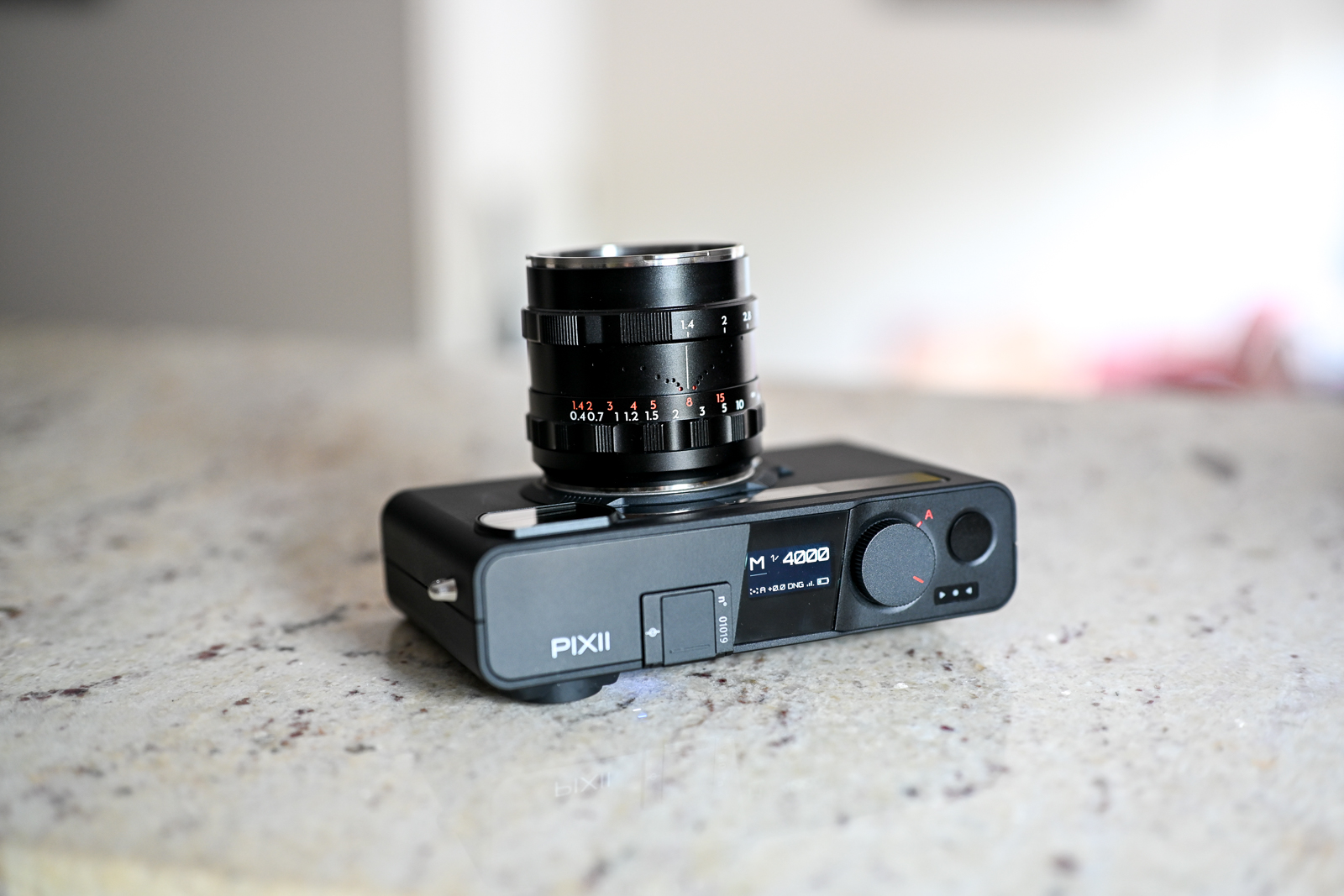
Pixii offers matte black and space grey versions of the Max. Since I only handled the matte black version, my commentary really only applies to that version.
Upon holding the Pixii Max, I was reminded of point-and-shoot cameras from the 1990’s. There’s something about the black matte finish combined with the lightness of the camera that felt like something from the 1990’s. It was a nice feeling.
Anyway, Pixii’s website states the camera has a “dual-block machined aluminum body.” I believe this means the interior shell of the body is formed with two pieces of aluminum. Good enough, I suppose. The exterior of the camera appears to be mostly plastic or vinyl (again, on the matte black version). The rear button is rubber. The shutter speed dial and strap lugs are some kind of metal.
The camera is extremely lightweight. It weights 480 grams, compared to a Leica M10 which is 660 grams.

Overall, the construction felt satisfactory, but it did leave me longing for more. The build of the matte black version didn’t knock me off my feet. The abundance of plastic, rubber, and vinyl material made the camera feel cheap, although that doesn’t necessarily mean it’s low quality. The camera is just very light, which doesn’t offer a sense of durability considering how much plastic is on the exterior. Additionally, the matte black finish scuffed very easy. Things like camera straps and fingernails will easily scuff the plastic/vinyl finish (though such marks can easily be rubbed away, so does it really matter?)
Viewfinder
The viewfinder is mostly no-frills (which is good). It’s not cluttered with an array of useless information all at once. On the bottom of the viewfinder you will find the shutter speed and ISO displayed by default. Slightly above these values a light meter is displayed. The instruction manual states that the information displayed can be personalized, but I honestly did not dive into the menu and test that. Either way, you don’t get much else in the viewfinder, thank goodness.
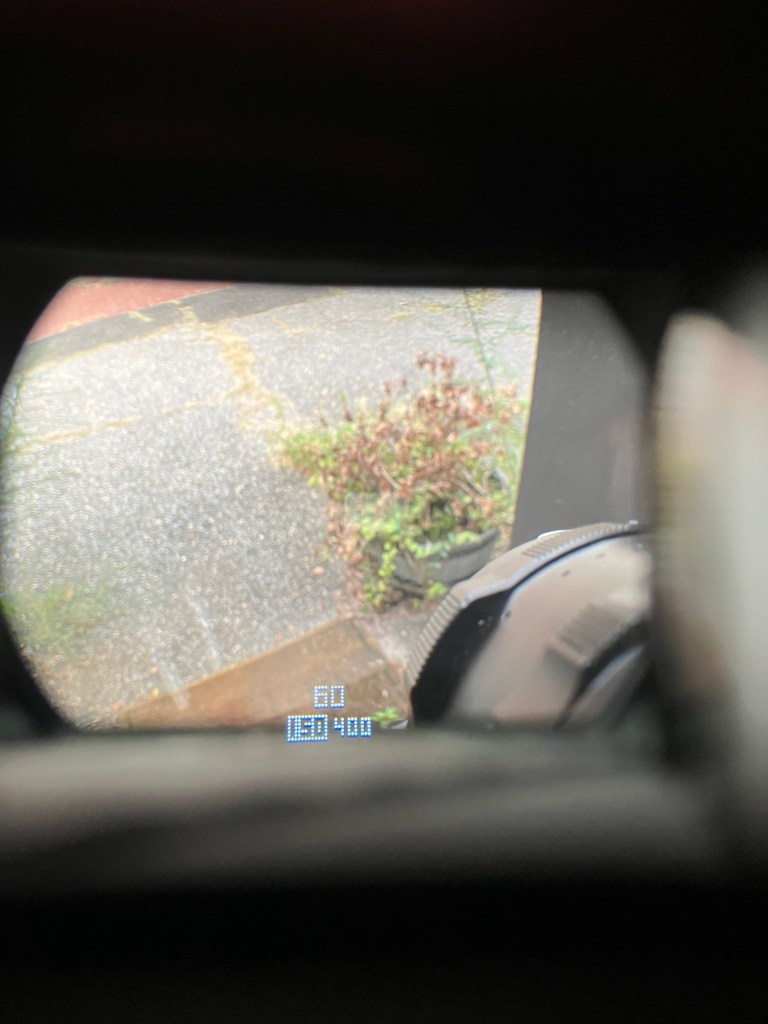


The frame lines are backlit LED and correspond with common focal lengths: 35mm, 40mm, 50mm, and 75mm+90mm combo. The different frame lines can be selected by diving into the menu. The brighness of the frame lines can also be adjusted in the menu.
Personally, I found the quality of viewfinder to be lackluster. I’ll discuss this more in detail further below while examining how the Pixii Max compares to Leica cameras, but overall I felt the optics lacked contrast/clarity. Viewing the world through the viewfinder was muddled and flat, and a little cramped.
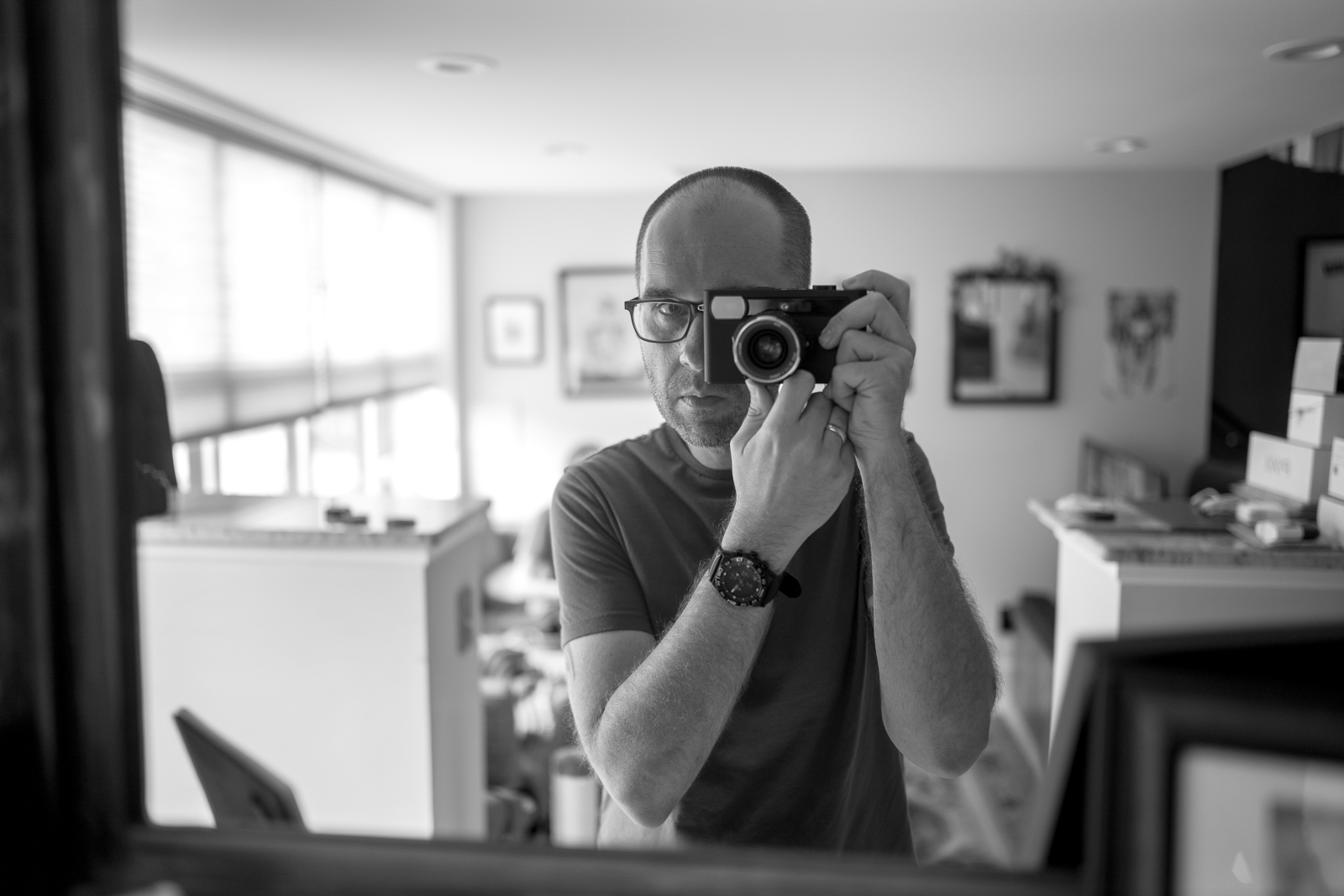
Additionally, I’m disappointed that the Pixii Max doesn’t include 28mm frame lines. Pixii says that the entire optical viewfinder displays a 28mm field-of-view, implying 28mm frame lines aren’t necessary. As someone who primarily uses a 28mm lens, I found this disappointing since frame lines are critical in composing and framing images on a rangefinder camera.
Rangefinder Patch
As someone who has been shooting with a Leica M of some kind for a little over 10 years, focusing with the Pixii was…frustrating. It was like I never used a rangefinder before. I’m sure a small part of this is the inherent learning curve of adjusting to new equipment, but not entirely. The split images in the patch were very faint and difficult to see. The patch itself was also very faint and lacked the same “pop” found in Leica bodies. The patch nearly blends in with the rest of the viewfinder, making it very difficult to focus. I’ve never experienced this with any of the digital Leica M bodies I’ve used. My wife even commented that the viewfinder and rangefinder patch were not as good as Leica bodies.
In the spirit of full transparency, I do use a -1.0 diopter with my M10-P and M60. I didn’t order a diopter for the Pixii, therefore I wore eyeglasses when using the camera. Perhaps the rangefinder patch (and viewfinder itself) would have been “better” with a diopter, but I doubt that. A very simple side-by-side of the Pixii Max, M10-P, and M60 with & without eyeglasses showed me that the rangefinder patch and viewfinder in the Leicas are far superior.

Metering
The Pixii Max has three different metering modes: spot, center, and average. The metering mode can be changed by diving into the menu. I doubt I have to expand much on this concept, since this is a fairly common approach to metering on modern cameras.
Sadly, I found the light meter to be inaccurate and inconsistent on the Pixii Max body I tested. It was so inconsistent and inaccurate, in fact, I wonder if there was something wrong with the body I used. All three modes generally overexposed whatever I metered by roughly 1-2 stops. I found this true with AUTO shutter mode and using the light meter in the viewfinder.
Spot metering was the most accurate, but was still prone to overexposure unless I literally filled the entire viewfinder with my subject and lighting conditions were flat (which defeats the purpose of spot metering).
Center and average metering modes overexposed nearly all the time. Both modes particularly struggled on sunny days, or if there was a bright light source anywhere in the frame. Center mode was easily tricked by inconsistent lighting outside the center of the frame. While its true uneven lighting or high contrast scenes can trick any camera’s light meter, I found the Pixii Max struggled by a larger margin compared to other cameras I’ve used.
Again, maybe there was something wrong with the body I was using. Exposure compensation was set to zero, so it wasn’t that. Other camera bodies in my arsenal (and a handheld light meter) metered correctly by comparison. To be fair, I didn’t use a grey card and conduct any specific tests. I just noticed that the Pixii Max would consistently overexpose everything when used in conjunction with my M10-P and M60.
To give you an idea what I mean, here are a few mundane test shots using the viewfinder light meter or AUTO shutter mode. These are straight from the camera using either Center or Average metering modes.




As you can see, these images are all a bit overexposed! It’s important to note these are the more extreme examples, but still reflects my experience overall while meting with the Pixii Max.
Shutter (or lack thereof)
The Pixii Max only has an electronic shutter. It doesn’t have a mechanical shutter. This allows the camera to achieve very fast shutter speeds, all the way up to 1/32,000. Wow! Personally, I believe shutter speeds this high are unnecessary, but I get it. The endless pursuit to advance technology requires such needless innovations. Still, there are very few conditions where I can see shutter speeds this high being useful for a capable photographer. Anyway, enough of that.
The Pixii Max lacks a mechanical shutter, therefore it utilizes an electronic shutter. This decision by Pixii makes sense. First of all, it’s essentially silent due to the lack of a mechanical shutter. More importantly, mechanical shutters involve moving parts, and for a company as small & new as Pixii that would create headaches down the road. Who would service these cameras, and for how much? This allows Pixii Max bodies to be futureproof, to a degree, since there are fewer points of failure in the camera. It also cuts down costs. Overall, an electronic shutter seems like a logical choice.

When the topic of electronic shutters comes up, typically that’s followed by a discussion about rolling shutter effect. If you aren’t familiar with rolling shutter effect, essentially certain motion captured by the sensor can create distortion since the sensor scans the scene line by line instead of capturing it all at once (like a global/mechanical shutter). Rapid flashes of light also cause rolling shutter effect. It’s a common and unavoidable effect for electronic shutters. The severity of rolling shutter effect depends on the camera/sensor and the scan rate of the sensor.
I’m not sure of the scan rate of the sensor in the Pixii Max, nor did I test the severity of rolling shutter effect produced by the sensor. Taking photos of fan blades and LED lights isn’t my idea of a good time… 😉 I can say, however, none of the typical everyday photos I took produced rolling shutter effect. I’m talking about people walking, outside light sources and things like that. Everything looked normal. I have encountered other cameras where even something as mundane as street photography would cause rolling shutter effect due to people walking. None of that happened with the Pixii Max, thankfully!
Menu
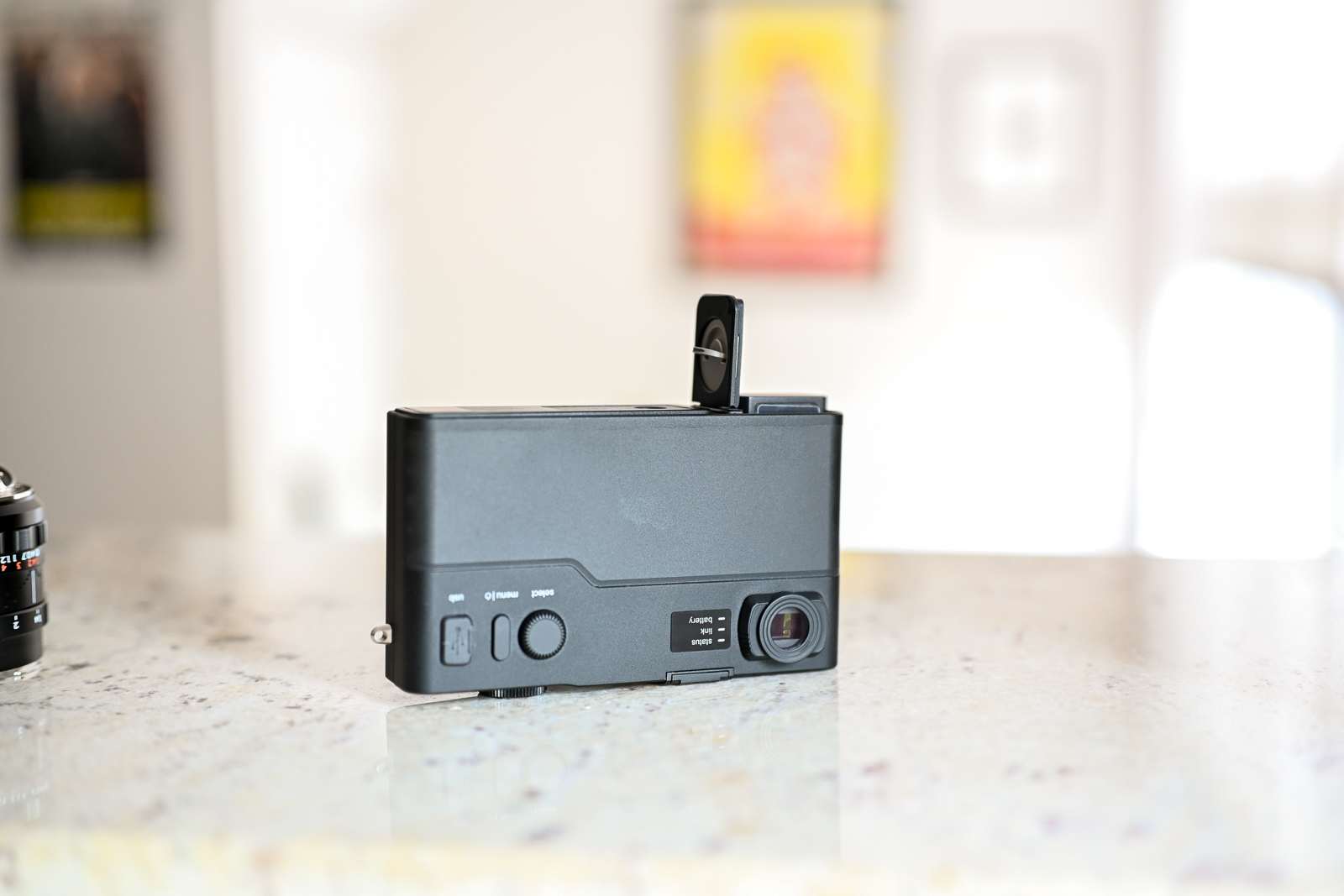
The menu is fairly straight forward and basic. The power button doubles as the menu access button; pressing this button will display the menu on the screen on top of the camera. Once you’re in the menu, you can access things such as frame line selection, ISO, monochrome mode, metering mode, exposure compensation, file format and so on. You get the picture.

Battery
The Pixii Max uses a very common and inexpensive battery: NP-FW50. Using this battery was a very smart move by Pixii. The NP-FW50 is a very common battery and costs $10 to $30. This is a huge plus for the Pixii Max, considering the state of Leica batteries. Leica batteries cost a few hundred dollars, and each camera model uses a different battery. Not only that, it appears that Leica has stopped supporting certain older bodies (M240, M-E, M-10) by not manufacturing batteries nor are they pursuing a third-party solution. Kudos to Pixii!
With that said, the battery life on the Pixii Max was abysmal. Man, oh man. This is partially due to the fact the camera has WiFi and bluetooth connectivity, and when these are enabled it’ll drain quickly. I didn’t measure the exact time, but I found that a fully charged battery wouldn’t last through an afternoon with bluetooth connected. Turning off WiFi and bluetooth connectivity improved battery a little, but not as much as I expected. Additionally, I found that the battery would drain by roughly 50% if I didn’t use it for a day or two. I can see why Pixii went with an affordable battery… users will need several extras.
Street Photography
The Pixii Max is a great camera for street photography. It’s small and inconspicuous. It lacks a screen and might look like a film camera to passersby. Most importantly, the shutter is nearly silent. It’s almost the perfect camera for street photography. Almost.

Camera Hiccups
Unfortunately, I feel the need to discuss a few hiccups I encountered with this camera. I debated even posting this review because of what I encountered. Every camera is a little quirky and certainly prone to occasional glitches. Even Leica. However, the number of issues I ran into with the Pixii Max was surprising and I felt it was important to share. I do wonder if the body I had was a dud. I’m not sure. But, encountering so many different quirks with a camera at this price left me with bad an impression of the Max. Allow me to elaborate.
First let’s talk about the app. The app and camera constantly had trouble communicating with each other. I followed the instructions provided by Pixii. I followed the steps in the app. All to no avail. Often, I had to completely remove & reinstall the app and reset the camera to get the app and camera to connect via WiFi. This was a short term fix since it would inevitably fail to connect via WiFi again at some point. Additionally, when connected via bluetooth, the app was extremely slow to load image previews or would simply not load previews at all. I encountered this from the get-go with only a handful of images stored in the camera’s internal storage. Furthermore, I could not download images via the app when connected to bluetooth and WiFi. When I would try to download images from the app, it would display an error message stating that WiFi was needed to download the images – despite being connected to WiFi. I quickly abandoned the app and stuck with viewing & transferring files via USB.
Next, I encountered several assorted issues while using the Pixii Max in typical everyday scenarios:
- The camera would occasionally freeze mid-exposure, forcing me to reset the camera by removing the battery for a few seconds. This happened roughly 5 times over the course of 3 weeks.
- The shutter dial would inexplicably stop changing the shutter speed when turned. The dial would turn, but the values wouldn’t change. This happened at least once during every photo session.
- The menu wheel on the back would struggle to advance menu options when turned. The wheel would turn fine, but the menu wouldn’t react accordingly. This happened all the time – the wheel and menu just felt out of sync.
- The light meter was surprisingly inaccurate. Spot meter mode was the least problematic, but would still struggle. Center and average metering modes consistently overexposed by 1-2 stops. Lighting conditions didn’t matter – the camera simply would not meter accurately or consistently.
Again, maybe the body I used was a dud. Maybe other users don’t encounter these issues. So please take all of this with a grain of salt. Ultimately, this seemed important to share with the community, so there you have it.
Image Quality
Image quality is great. The 24MP sensor performs just like any other 24MP sensor. It’s just as good as any 24MP Sony a7, Nikon Z, Leica M10 or Leica SL camera that I’ve used. Simple as that. Head to the bottom of this page to view samples taken with the Pixii Max.
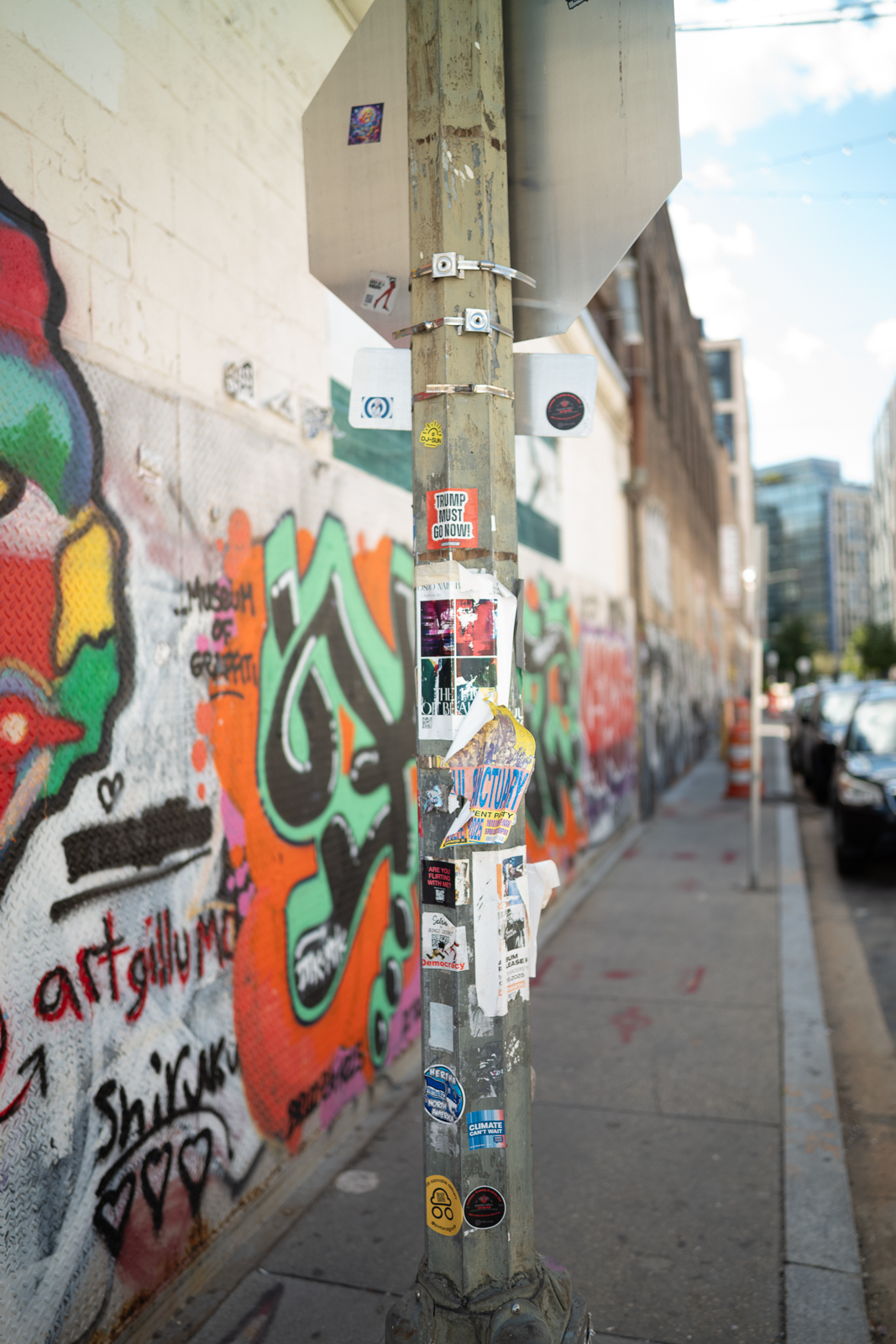
The biggest variable in image quality is the lens, naturally. While a rather obscure lens, I did experience a green cast in corners with the Thypoch 28mm f/1.4 ASPH. Before you wonder if this was just an anomaly with the Thypoch, it’s important to point out that the same lens didn’t perform in this manner on my M60 or M10-P. Nor did I notice this color cast with a 28mm Summilux or 35mm Summilux. So, I wonder if certain M-mount lenses might behave strange with the Pixii Max, similar to the Sony a7. Here is a quick example of what I’m talking about:

Monochrome Mode
The Pixii website has some fancy words and numbers explaining why their cameras take great monochrome photos. If you want to read all that, go check it out. The takeaway is this: the Pixii Max has a monochrome mode, which provides the ability to take native DNG monochrome photos. I don’t have a Leica Monochrome camera on-hand for comparison purposes, so I’m not going to jump that deep into this rabbit hole.
I took a few side-by-side photos showing the difference between shooting in monochrome mode compared to converting color files to monochrome in Lightroom.


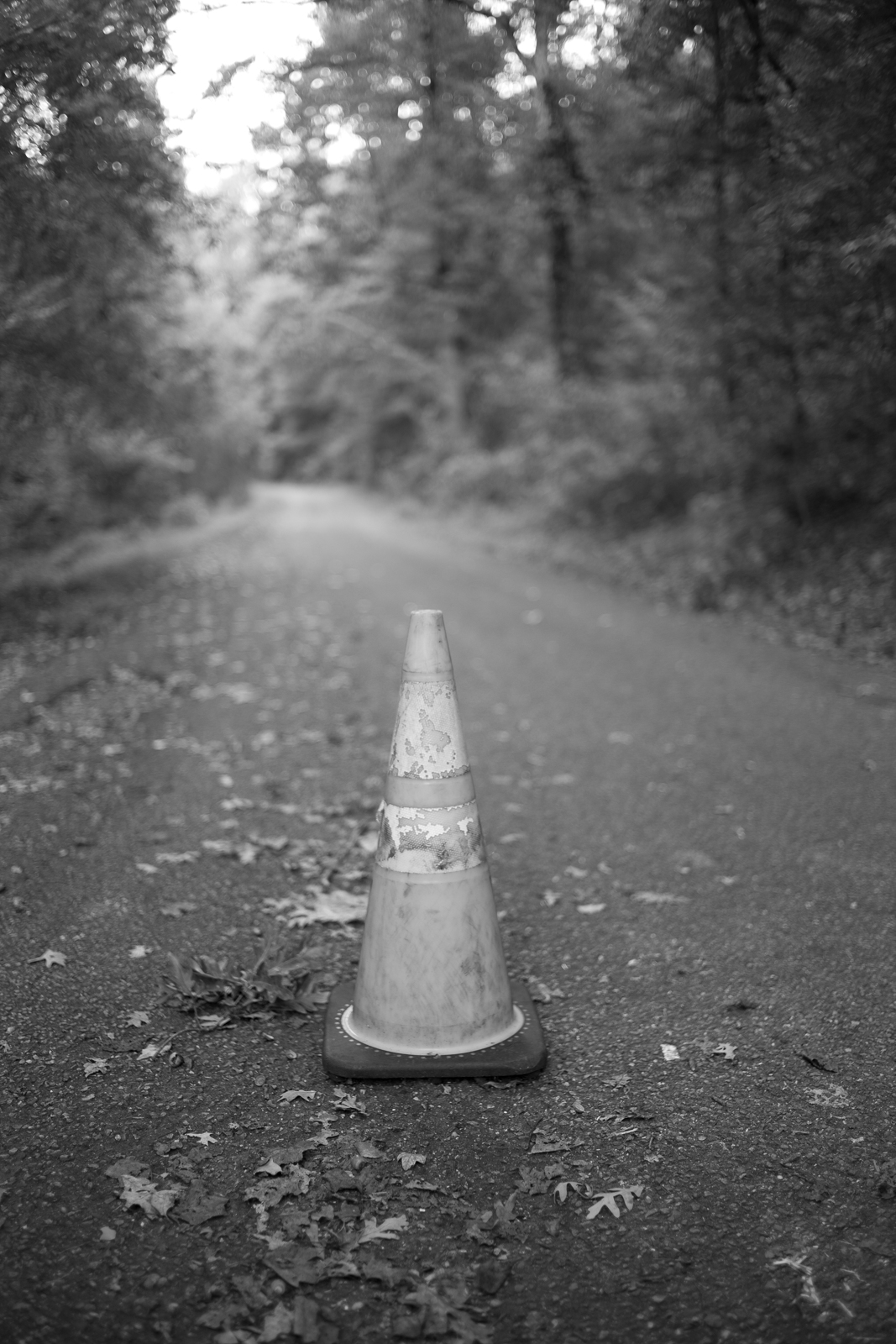

There are some subtle differences. Images shot in monochrome mode appear to have slightly more contrast. However, that could be caused by the white balance settings of the color images before conversion. The camera was set to AWB and color images were set to daylight in Lightroom before conversion, by the way. I don’t really have an opinion on this matter… I love shooting in black and white, and the Pixii Max is more than capable of doing that.
High ISO
As is the case with all modern digital cameras, the Pixii Max is capable of very high ISO values. There really aren’t any surprises here. The higher the ISO, the more noise. Personally, the high ISO range doesn’t matter much to me since I rarely shoot above 800 or 1600. Still, I was impressed by how relatively “clean” the images were with higher ISO values when properly exposed. Here is a quick side-by-side comparing 800 and 12,800.


How Does the Pixii Max Compare to a Leica?
This is the million dollar question, isn’t it? Maybe you’ve been priced out of buying a new Leica. Maybe you don’t like the Leica brand. Maybe you’re just curious. No matter the reasoning, if you’ve wanted to shoot with a full-frame digital M-mount rangefinder, your only choice has been to buy a Leica. Now there’s a kid on the block. So, how does the Pixii Max compare to a digital Leica rangefinder? Where do I even begin…
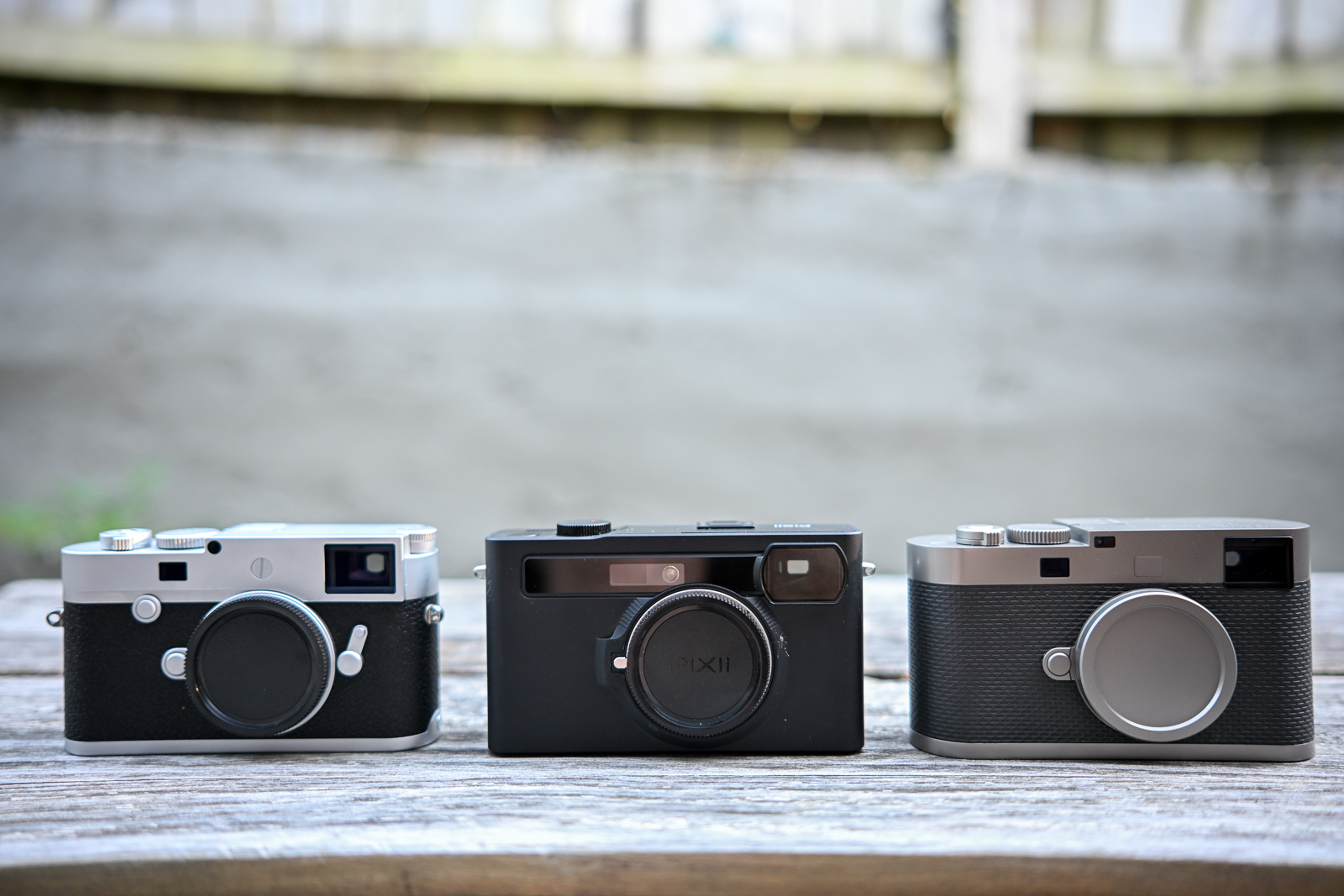
After handling the Pixii Max for about a month, I’ve developed many thoughts and opinions around this question. To be perfectly blunt: the Pixii Max is not a Leica replacement. It’s not even close.
With that said, I think it’s fair to say the Pixii Max is a viable alternative to Leica. It’s an alternative in the way non-fat soy chocolate ice-cream is an alternative to regular dairy chocolate ice-cream. Both might taste similar, both might look the same, both might be used the same. Some might prefer non-fat soy due to personal reasons and circumstances. But at the end of the day they’re not the same. I don’t consume (much) dairy, but I’ll be the first to say regular ‘ol dairy ice-cream tastes way better than most non-fat soy ice-cream. Perhaps this is a silly analogy but I think you get the point. The Pixii Max might be an alternative to Leica, but Leica cameras are still superior (in my opinion, of course).

At this point, you might wonder why I’m being so harsh towards the Pixii Max. Am I some kind of Leica fanboy? Maybe. But I’ve handled essentially every digital Leica M, from the M8 to the M11 and the Pixii Max simply can’t compete with any of them (expect maybe the M8). Let me summarize my opinions.
Build Quality: From the M8 to the M11, all digital Leica rangefinders are simply built better. Lenses mount better. The buttons feel more solid. There are fewer exterior plastic components. The dials feel more solid. There is a certain reassuring heft & weight that is lacking in the Pixii Max.
Handling: To be fair, the Pixii Max handled fine. It was fun to use (when it worked). However, I prefer the handling of any digital Leica M. My biggest complaint is the viewfinder on the Pixii Max: it’s vastly inferior compared to my M60 and M10-P. The world is more crisp, clear and contrasty when viewed through a Leica viewfinder. The same goes with the rangefinder patch. The Pixii Max rangefinder patch was very faint and the split images were very hard to see. Additionally, the Pixii Max lacks a dedicated ISO button/wheel, and the shutter dial doesn’t display shutter speed values. Lastly, I found the Pixii Max to be too light, causing it to be unbalanced when certain lenses were mounted.
Eco-System: Pixii is a newer company, with a small lineup of cameras, so it makes sense its eco-system is limited. Still, the Leica eco-system has more options. Threaded soft-release shutter buttons. Half-cases. Thumb-grips. Readily available diopters. Other than diopters, none of these are offered by Pixii. Additionally, digital M bodies come with the ability to read 6-bit codes on Leica lenses.
Financial Investment: Consider this… in 2021 I bought a used M10-P. Last week I sold that same camera for more than I originally purchased it for. That’s the power of Leica gear. If you shop smart and get a good deal, there’s a very good chance you’ll at least break even if you sell it down the road. I really don’t see this being the case for the Pixii Max.

I realize this all makes me sound like a Leica fanboy, and I wouldn’t be offended if you called me that. It’s true. I prefer shooting with a Leica. They’re great cameras. The company understands what it means to practice photography as a craft and artform, and they create nearly perfect tools to achieve those ends. I tried to keep my bias from showing too much in this post, but ultimately there were aspects of the Pixii Max that just kept me from considering it an absolute alternative to Leica.
Anyway, how about a few photos as a pallet cleanser? These aren’t great photos. They’re just meant to show how files from the Pixii Max compare to 24MP Leica bodies.







Off the bat, I will say the Pixii Max has a green color cast in the corners when used with a Thypoch 28mm f/1.4 ASPH. I didn’t see this when I took these photos (no LCD screen and the app was very problematic for me), and I only noticed the color cast upon reviewing the photos days later. My M10-P and M60 did not have the same corner color cast with the Thypoch. I didn’t notice a similar anomaly with my 35mm Summilux ASPH FLE on the Pixii Max, either. I don’t know if this is an anomaly confined to the Thypoch, or if certain lenses might not work well with the Pixii Max. Or maybe something else entirely. There are reports that Sony a7 models display this anomaly when used with certain M-mount lenses, so I wonder if the same is true with the Pixii Max. But, I simply didn’t test enough lenses to say for certain. Either way, just make sure to test whatever lens you plan on using with the Pixii Max before keeping it.
Minimalist Camera?
I’m certain some folks interested in the Pixii Max are looking to take a minimalist approach to photography. It lacks an LCD, and doesn’t include all the bloated bells and whistles found on modern Canon/Nikon/Fuji/Sony cameras. More or less, the Pixii Max gives you only what you need to practice photography.
So, is the Pixii Max a minimalist camera? Can it scratch that minimalist itch? Overall, yes and yes. Compared to Canon/Nikon/Fuji/Sony, the Pixii Max strips away most of the bloat found on modern mainstream camera bodies. It even takes away the LCD screen! You get essentially just what you need. The menu is straight to the point. There is only one port (USB). There is only one control dial. There isn’t a hot-shoe (it has a cold-shoe for accessories). There isn’t a memory card slot.
If you’re new to the rangefinder world and currently use a Canon/Nikon/Fuji/Sony, but want something minimalist, I think you’ll be pleased with the Pixii Max. The company’s implementation of a minimalist camera isn’t perfect, but it hits the mark.
If you’re looking for an M10-D or M11-D replacement, or have used an M10-D or M11-D, you will likely be disappointed. The Leica -D line takes minimalism to a level of perfection. The Pixii Max takes minimalism to a level of good enough.
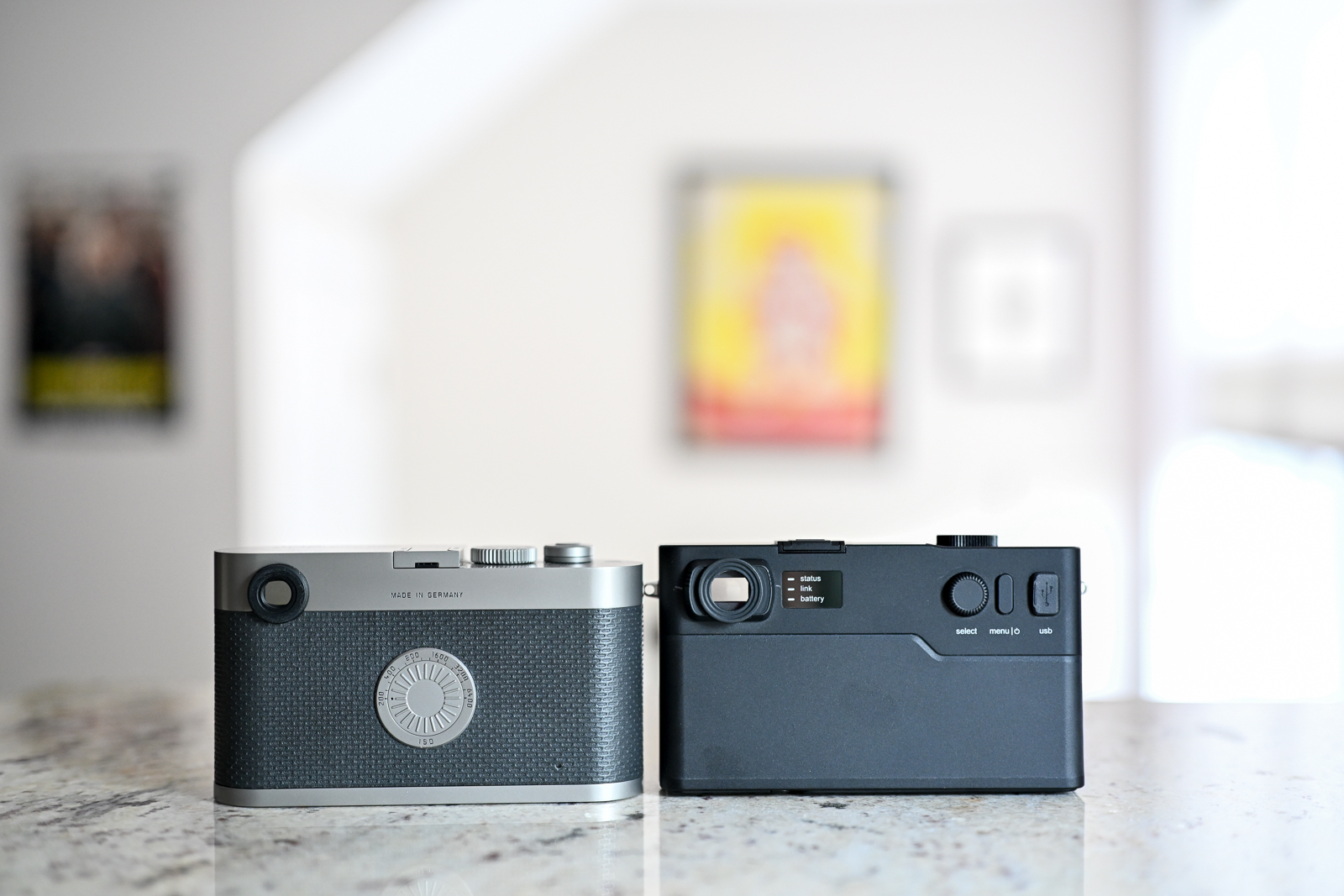
Recommendations
You have never handled a digital Leica and plan to use Leica glass:
My thoughts are somewhat split if you fall into this camp. On the one hand, being able to purchase a digital rangefinder brand new for under $5,000 is unheard of the in Leica/rangefinder community. An M11 costs more, new or used. Plus, batteries are plentiful and cheap for the Pixii Max; Leica batteries are expensive and seemingly scarce depending on the model.
On the other hand, if you have Leica glass, I personally feel that you should use a Leica body. You will really miss out on the rangefinder experience by mounting Leica glass on the Pixii Max. Not that the Pixii Max isn’t capable of taking good photos with Leica glass – it is more than capable. Rather, the approach taken by Leica is rather unique and is carried across their entire product line. You really need to be firmly planted in the Leica eco-system to appreciate Leica’s approach to photography. If you fall into this camp and your budget is around $5,000, I recommend getting the best used M10 or M11 that you can afford to pair with your Leica glass. You’ll ultimately wish you did this from the get-go. Additionally, Leica digital rangefinder bodies have held their value extremely well in recent years. I suspect used Pixii Max bodies will be sold at a hefty monetary loss if purchased new and resold.
You have never handled a digital Leica M, and plan to use non-Leica glass:
Let’s say you plan to use a Voigtlander or Zeiss lens with the Pixii Max. Maybe Leica glass is out of reach due to cost (very realistic in this economy). If this is you, then the Pixii Max should be considered. The Pixii Max is more than capable of taking great photos, and is a good way to become comfortable with the technique needed to use a rangefinder. Look at it like a introductory/economy digital rangefinder. Not only that, recent lens released by Voigtlander are quite nice – they’re lightweight, optically astounding, and relatively affordable. Personally, I view this as the ideal audience of the Pixii Max.
You are a current digital Leica M user and are looking for a second body:
My advice for those in this camp is fairly straightforward: I personally don’t see the Pixii Max as a viable long-term second body for those currently shooting with a digital Leica M. It’s a fun camera, don’t get me wrong, and maybe it’ll challenge you in a good way. But the Pixii Max is no Leica. If you’re curious, then go for it, but keep your expectations low.
You are a current digital Leica M user and are looking for a replacement:
I don’t recommend replacing your current digital Leica M body with the Pixii Max. Maybe your current body is older (M9 or M240) and you want to sell it for something newer. Maybe you have an M11 and are trying to free up funds for a lens (or life). Maybe your M10 broke. Maybe previously had a digital Leica M but got rid of it. No matter the situation, if you’re looking to replace your digital Leica M, I’d recommend getting the best Leica that you can afford. Unless, of course, you’re in a photographic rut or are looking for a new challenge. Switching to the Pixii Max might reinvigorate your approach to photography. Or it might make you long for a Leica again. Or you might be extremely happy with the Pixii Max and won’t look back…!
You are looking for an alternative to the -D series (M60, M-D 262, M10-D, M11-D):
Frankly, the Pixii Max isn’t a viable alternative to the -D series. Every aspect of the -D series is well thought out and the experience of shooting with a -D is unparalleled. Leica truly gives you exactly what you need to practice the craft of photography with the -D series, and the implementation of Leica’s photographic philosophy is very apparent. If you’re looking for a minimalist camera, the Pixii Max will scratch that itch but it won’t come close to a -D series Leica.
You primarily shoot with a 28mm lens:
This is simple. If you primarily shoot with a 28mm lens, you will be frustrated with the Pixii Max since there are no 28mm frame lines.
Conclusion
I really wanted to like the Pixii Max. I was super excited when I ordered the camera, and I felt like a kid on Christmas morning when it arrived. It looks cool and fun. It’s the only full-frame non-Leica M-mount digital camera. Brand new, it’s less expensive than any Leica. It has a lot going for it.
Ultimately, I was disappointed with the Pixii Max, which I hate to say. To be fair, the camera is capable of photos as good as any other 24MP camera, it was fun to use, and it was challenging in a good way. However, the camera kept getting in its own way and was frustrating to use; it was a little glitchy. It didn’t feel as solidly constructed as Leica bodies. The battery life was disappointing. The viewfinder and rangefinder patch were inferior. It doesn’t have 6-bit coding for Leica lenses.
Overall, it felt like using a Canon/Nikon/Sony/Fuji instead of a Leica. I’ve read a few reviews from folks who love the Pixii Max, which is great and understandable since everyone has different tastes. Personally, it felt like a beta camera that hasn’t been fully fleshed out and doesn’t warrant the hefty price tag it carries. I realize Pixii is a small startup company, so it’s not entirely fair to hold them to the same standards as Leica, but for $5,000 I was expecting more. Part of me wants to say it’s overpriced – my Nikon zf is an amazing camera and was $1,800 brand new, for example.
With that said, I think the Pixii Max has potential. The company seems to be focused on updating and improving their products as necessary, so maybe firmware updates will clean up its act in the future. I commend the company for trying to fill a void in the photography marketplace. Most importantly, it’s a good option for those who can’t afford a brand new Leica and don’t plan to use a Leica lens.
Just keep your expectations muted, make sure the lens you plan to use performs adequately on the camera, and buy it from a reputable source to take advantage of the warranty. Maybe one day I’ll revisit the Pixii Max, but for now I’m sticking with Leica.
Sample Photos
Images were shot in Washington DC, with either a Thypoch Simera 28mm f/1.4 ASPH or Leica 35mm Summilux ASPH FLE “M60.” Black & white images were converted from color image files.
























 Photos by Johnathan Comer